Hrazdan. Church. 13th Century. Universa.
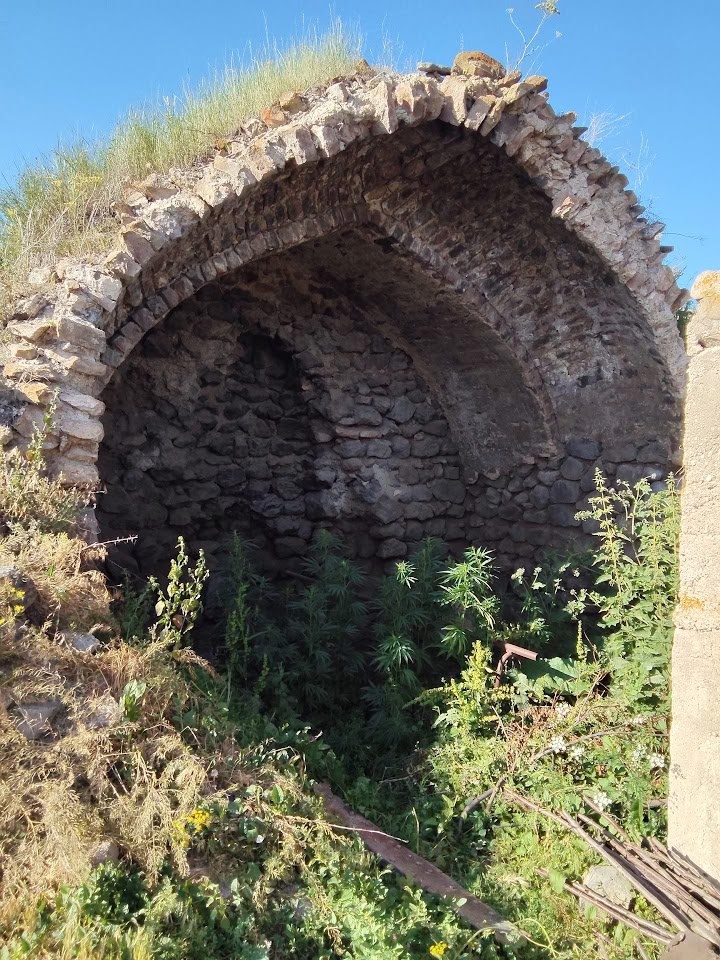
Earlier we wrote that in Yerevan courtyards you can see contemporary art not worse than gallery exhibitions. Hrazdan goes even further. In local private gardens you can find 13th-century caravanserai remains that not every local-history museum could boast. In our set, this is the third photo (top to bottom, left to right).
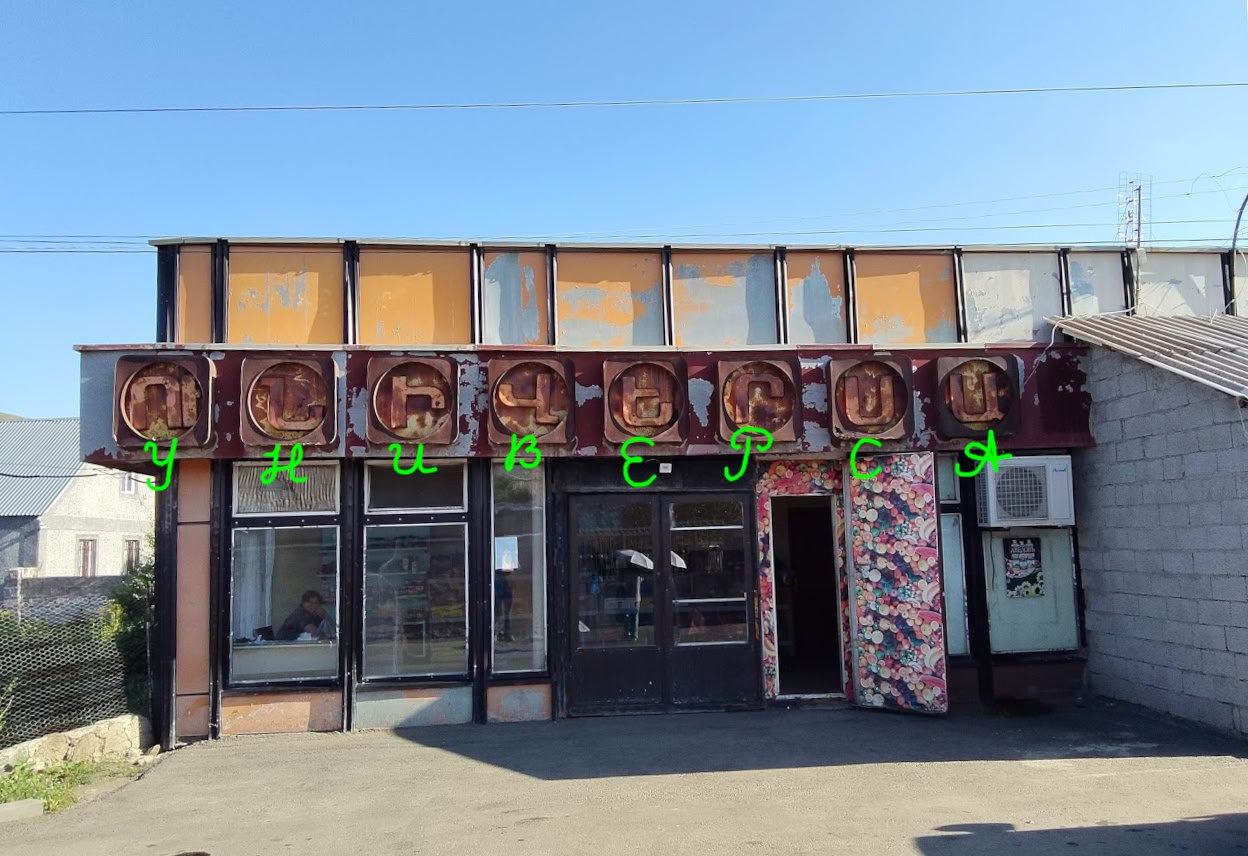
Continuing the bilingual-sign theme, we found a very historical spot preserved from Soviet times. Intuition was right: a shop sign in the village says “UNIVERSA.” The final “M” was eaten by a later brick extension. The sign outlived the Soviet Union by 35 years. If we estimate its age from the city’s founding and power-station construction around 1970, that is a solid 55 years.
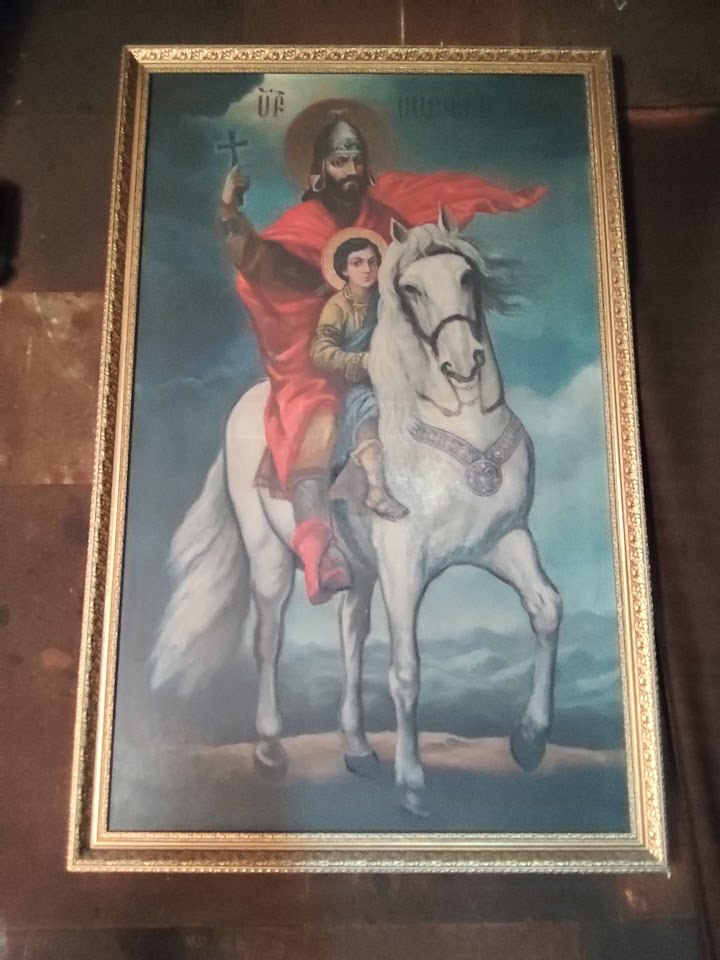
Near a modern busy road, among private plots, there is another fragment of antiquity: an Armenian Apostolic church. Very cozy and powerful place. The icon in our photos is from there. We were intrigued by an unusual scene - a child on a horse beside a rider. Our Iron Friend explained that the rider is Saint Vardan Mamikonyan, a 5th-century military leader. The youth figure is an allegory - symbol of purity, the Armenian people, faith, and spiritual heritage. At least that is what ChatGPT said.
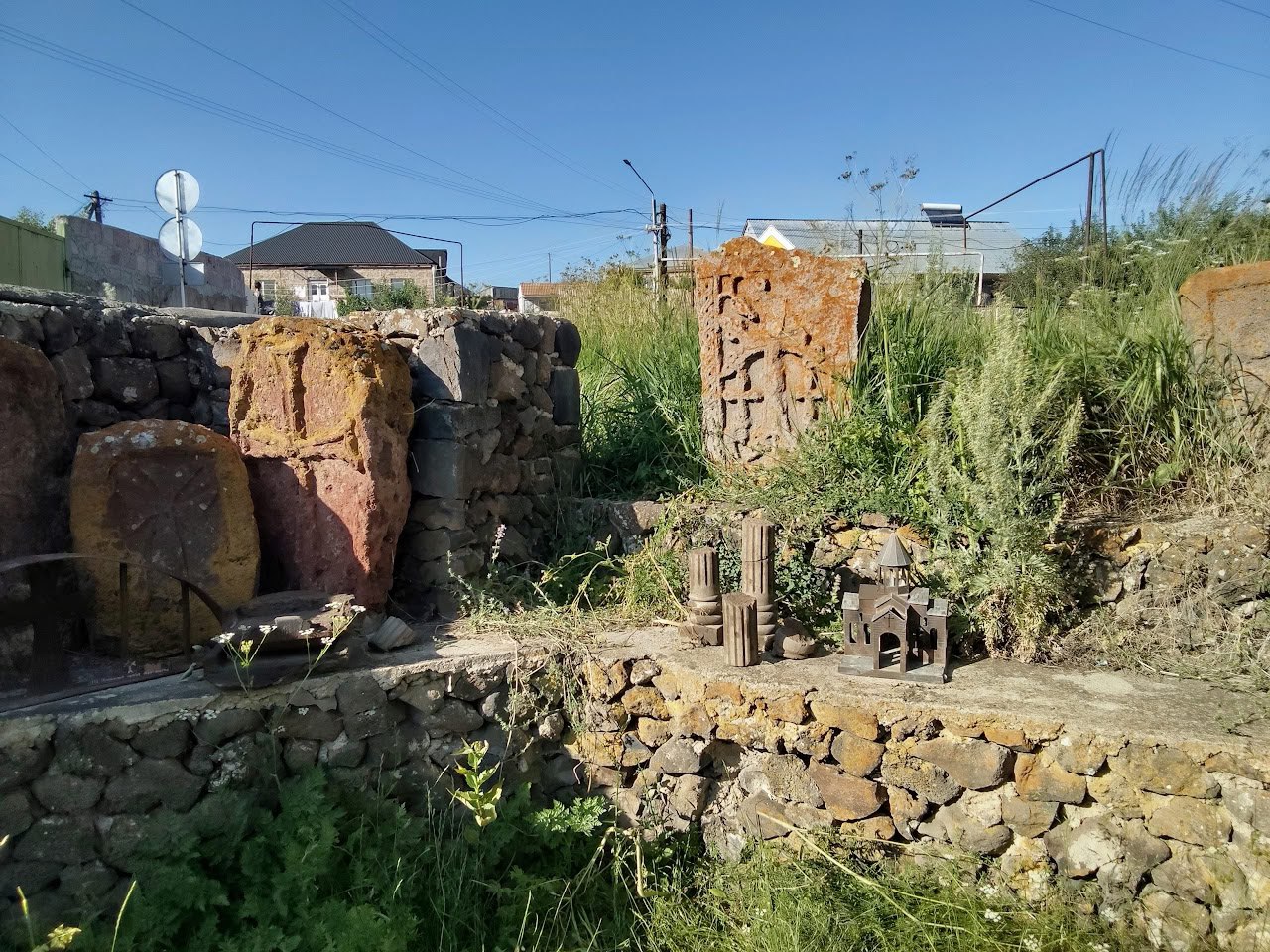
Another revered fragment of old times is Kapuyt Khach - a chapel and crosses nearby. The place is overgrown, but not abandoned. You can see people still come there and stay connected to their roots.
For us, this eight-century leap into the past between private household plots was a complete surprise.
#placeArmenia #Armenia #Hrazdan